Immerse in the wild welcomes you to a full-screen, high quality wildlife photography viewing experience. You are invited to click on any photo to view additional information including the photographer’s name, camera settings, photo title, and a brief description.
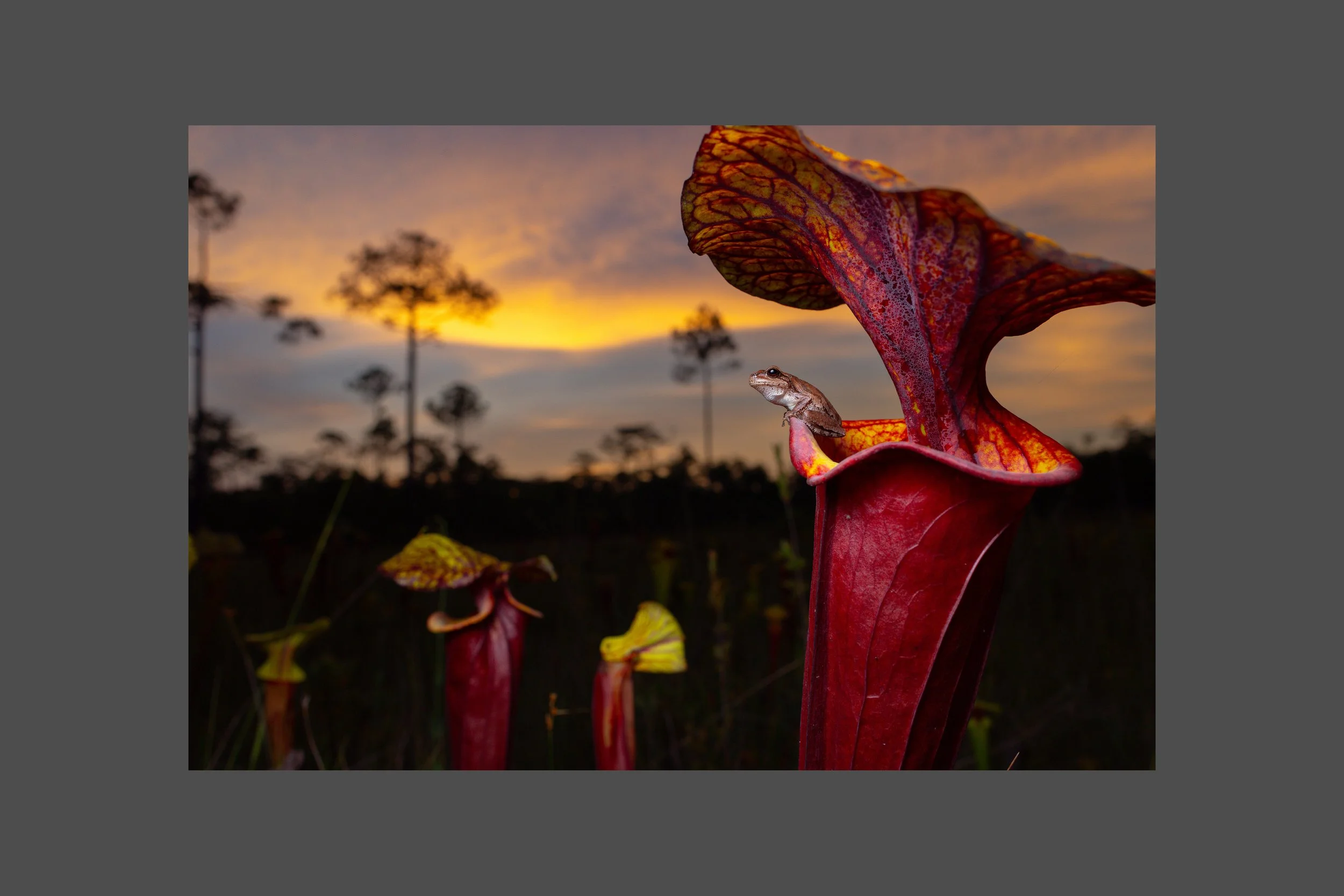
Partners in a Strange World
Photographer: Matt Bruce
click to view full-screen
1/100 • f/8 • ISO 320 • Canon EOS R5 • 24mm • Canon RF 24mm f/1.8 Macro IS STM


Here, a pine woods treefrog is perched at the entrance of the "pitcher" of the yellow pitcher plant (Sarracenia flava). These treefrogs have actually developed something of a mutualistic relationship with pitcher plants. The plants have evolved chemical and visual lures on the underside of the "hood" to attract flies and other small arthropods. After landing under the hood a fly will often fall down into the watery pool deep inside the pitcher and become trapped. It will then get digested very slowly over the course of weeks or months. However, if a treefrog that's sitting just inside the pitcher catches that fly, digests it, and poops it out, those nutrients are readily available to the plant. The plant provides shelter and a steady source of prey for the frog, and the frog does the digestive heavy lifting for the plant. Both species benefit.
Capture note: For this shot I dialed in an exposure for the sky and illuminated the foreground with an off-camera flash and 8x12" diffuser.
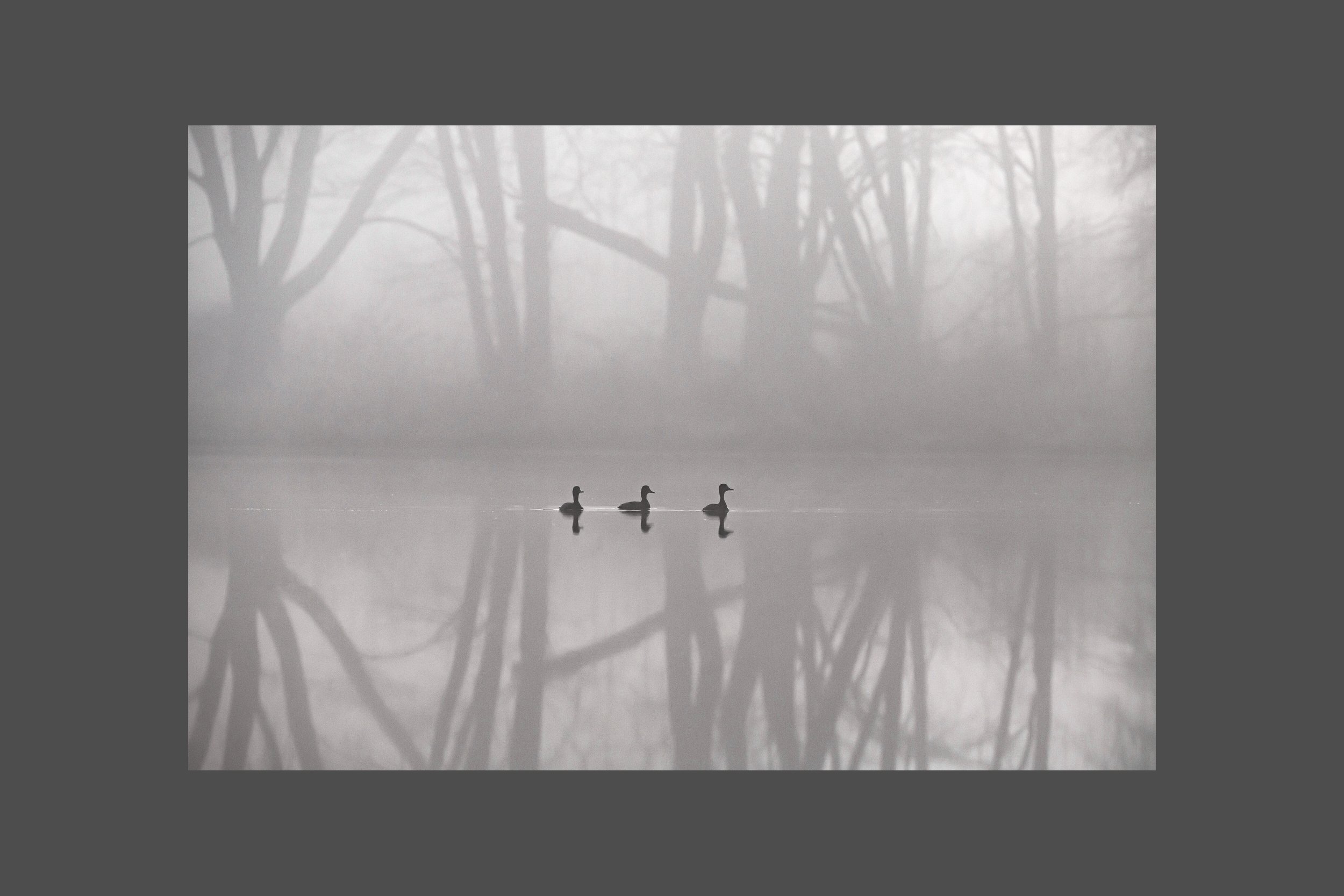
Quiet Passage
Photographer: Nikunj Patel
click to view full-screen
1/2000 • f/7.1 • ISO 800 • Nikon Z9 • 600mm • Nikon 600mm f/4 ED VR
On a foggy morning, a group of ducks glides through calm water, surrounded by tree trunks shrouded in a soft, mysterious haze. I came across the scene while walking quietly along the shoreline, drawn in by the stillness before the day began. The reflections of the fog-laden trees in the tranquil surface added an extra layer of beauty to the moment, and I waited for the ducks to settle into the frame before pressing the shutter.
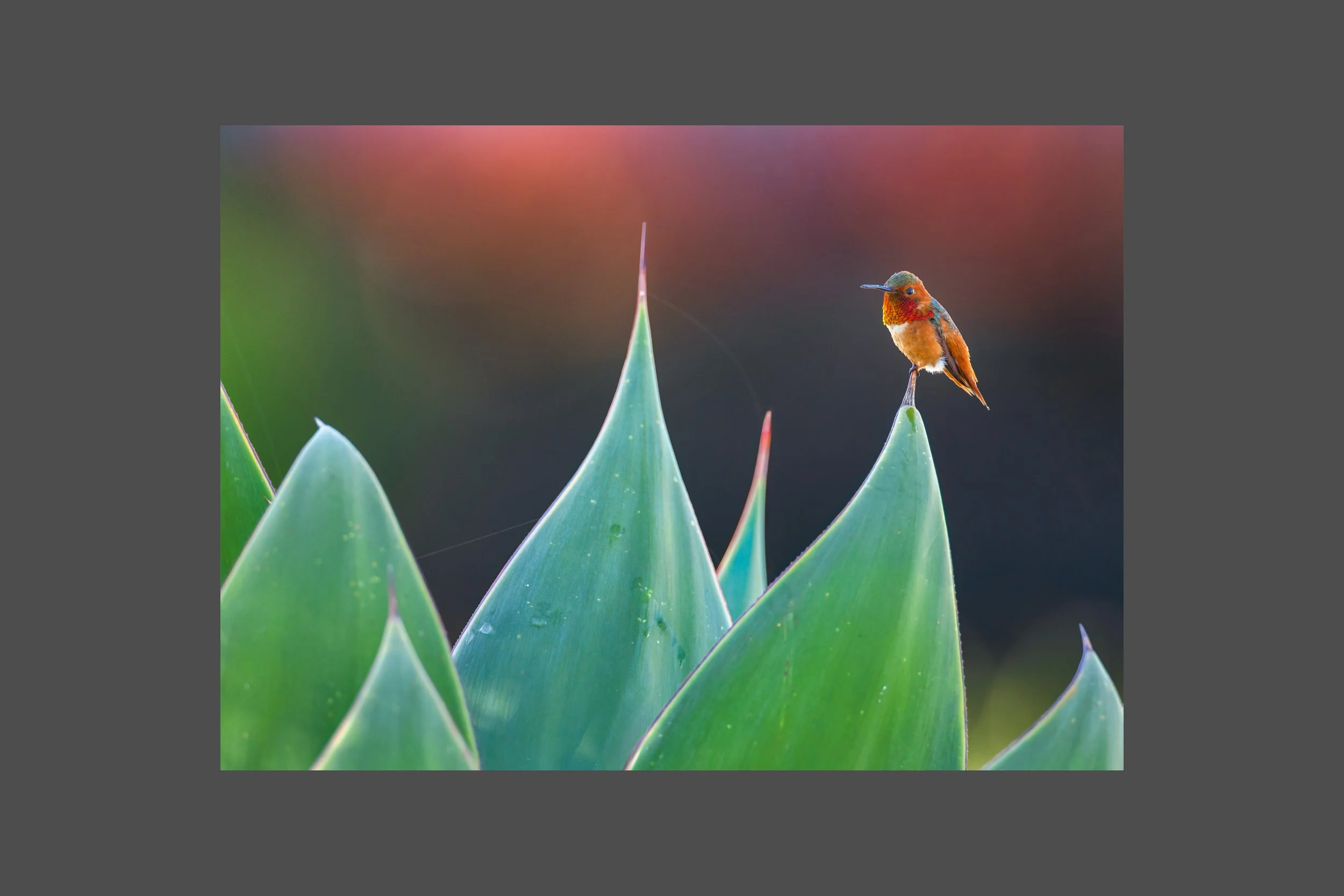
Tiny King of the Agave
Photographer: Katherine Sayn-Wittgenstein
click to view full-screen
1/500 • f/5.6 • ISO 1250 • Canon R3 • 840mm • Canon EF 600mm f/4 + 1.4x TC
This male Allen's Hummingbird was consistently returning to perch on this agave plant to monitor his territory. The plant was not in the best spot being on a median on a fairly busy street. The location presented a bit of a challenge due to road traffic and the need to get down low but also offered up 360 degrees of variable backgrounds including asphalt, wooden fences, stone walls and various blooms. This image offered the perfect light angle to set his gorget glowing against a fence and some flowers off in the distant background.
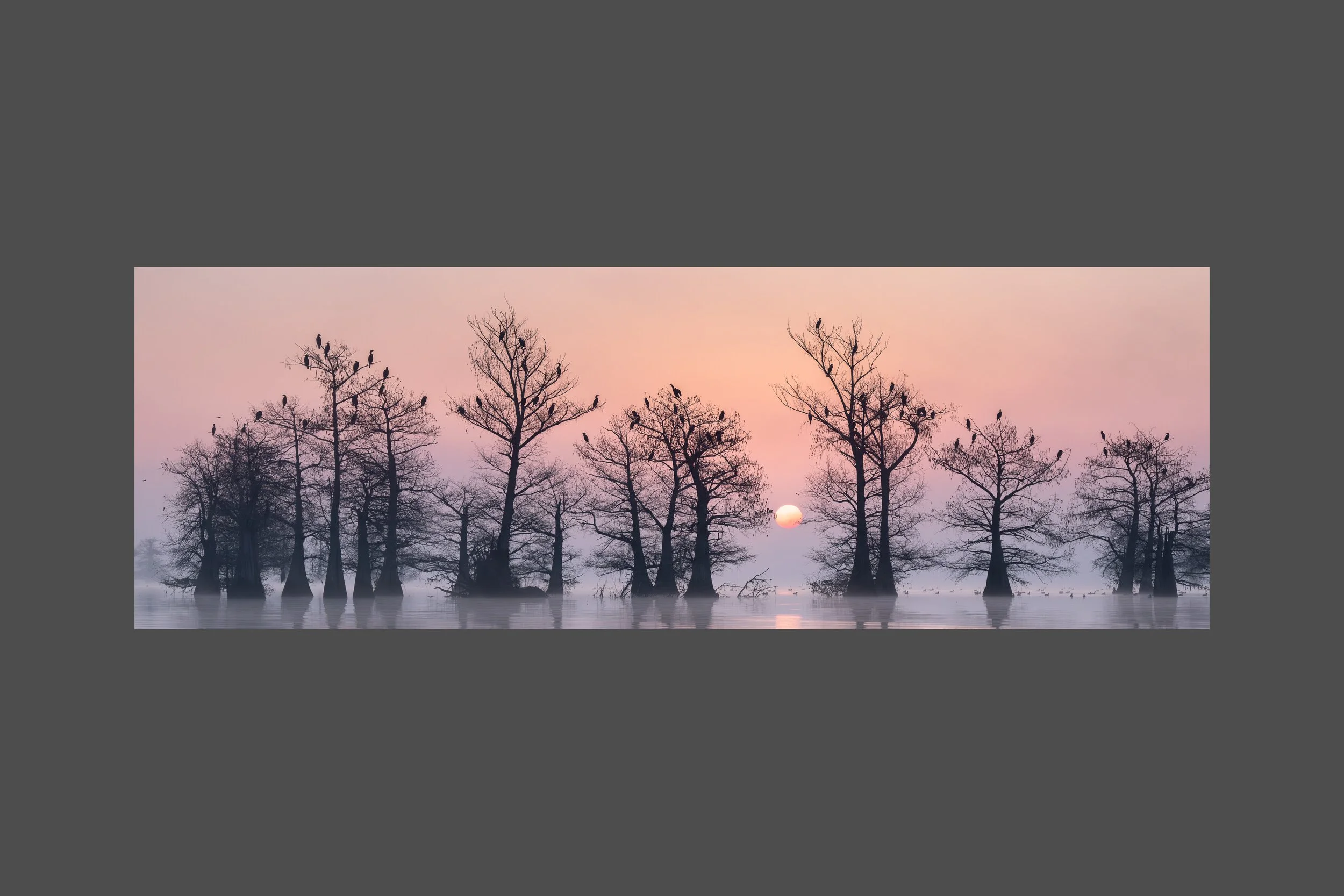
Cypress Stand at Daybreak
Photographer: Tobias Yoder
click to view full-screen
1/640 • f/6.3 • ISO 640 • Nikon Z8 • 90mm • Nikon Z 24-200mm
I see this style of image as working like a tapestry of details and sub-compositions to explore. The lack of a prominent main subject lets your eye wander and pick out little vignettes. The birds, the fog, the trees, and the relationships between them. That makes it more fun as a large print that might stay on the wall for a while.
The morning I captured this photo I woke up later than I should have. Even after 10 years of bird photography, I still cut it close sometimes. I had about a two mile kayak to this cormorant composition I had scouted the night before. With no fog at my camp spot in the morning, I told myself, “eh, I will probably find some subjects closer.”
Once I was on the water and first light came, I realized the fog was incredible but it was just only over the lake. There were no nearby birds, I needed to make it all the way to the roost. The shoreline completely vanished, and as I paddled eventually I could hear faint cormorant calls ahead which guided me through the calm foggy void.
Thankfully, I had just enough pre-sunrise margin to make the two-mile paddle in time to watch the sun rise behind my composition.
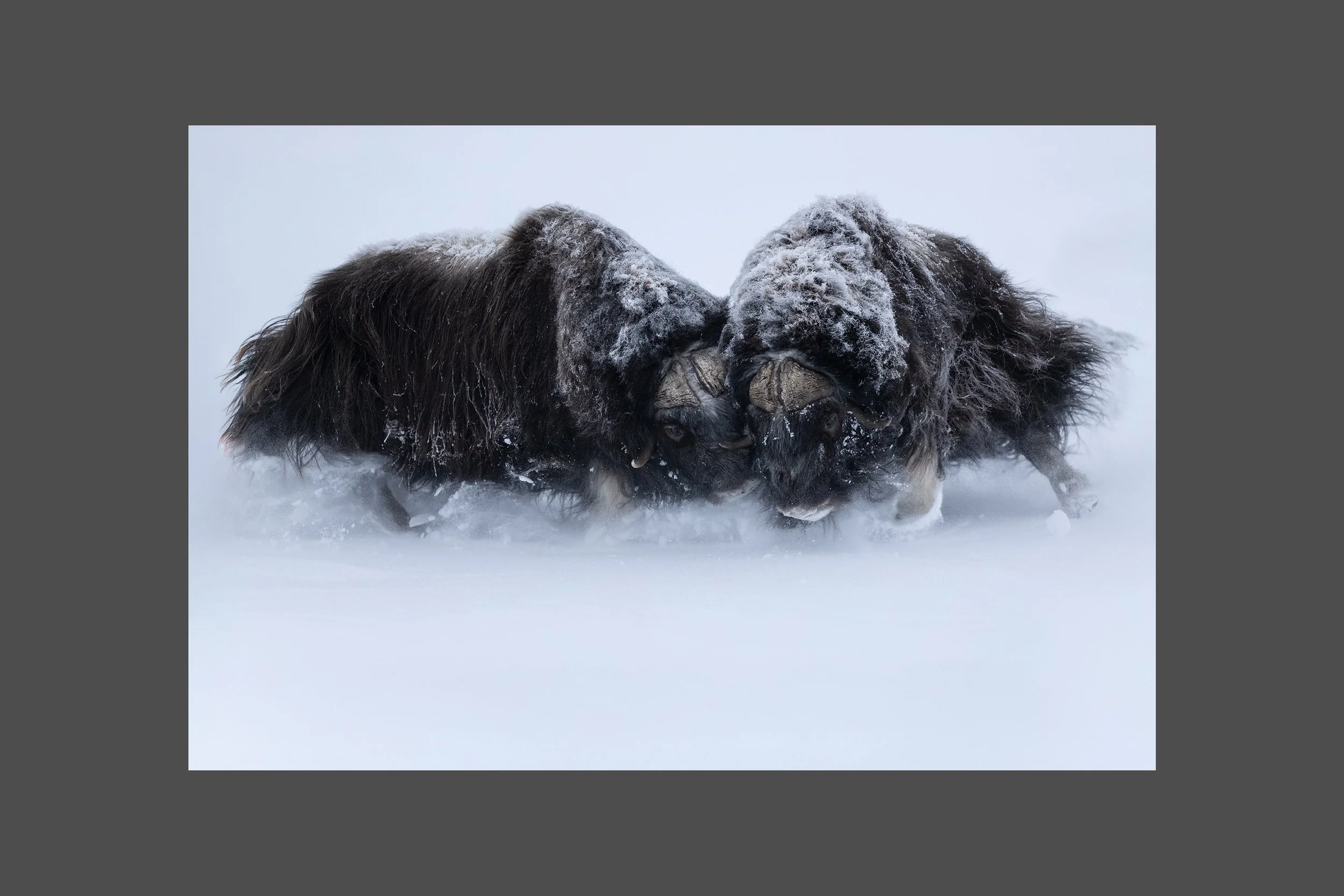
Frozen Battle
Photographer: Trond Westby
click to view full-screen
1/640 • f/4 • ISO 1600 • Nikon Z9 • 600mm • Nikon Z 600mm f/4 TC


I have always dreamt of a perfect photograph of the musk oxen. As I don’t think there is such a thing as a perfect picture, this might be close of what I imagined. It is not common for the musk ox to fight like this in the winter. Usually they will just head butt to show who is the leader. But this was deadly serious. Definitely worth the 4 hours hike with heavy backpack, snow shoes and minus 16 degress celsius.
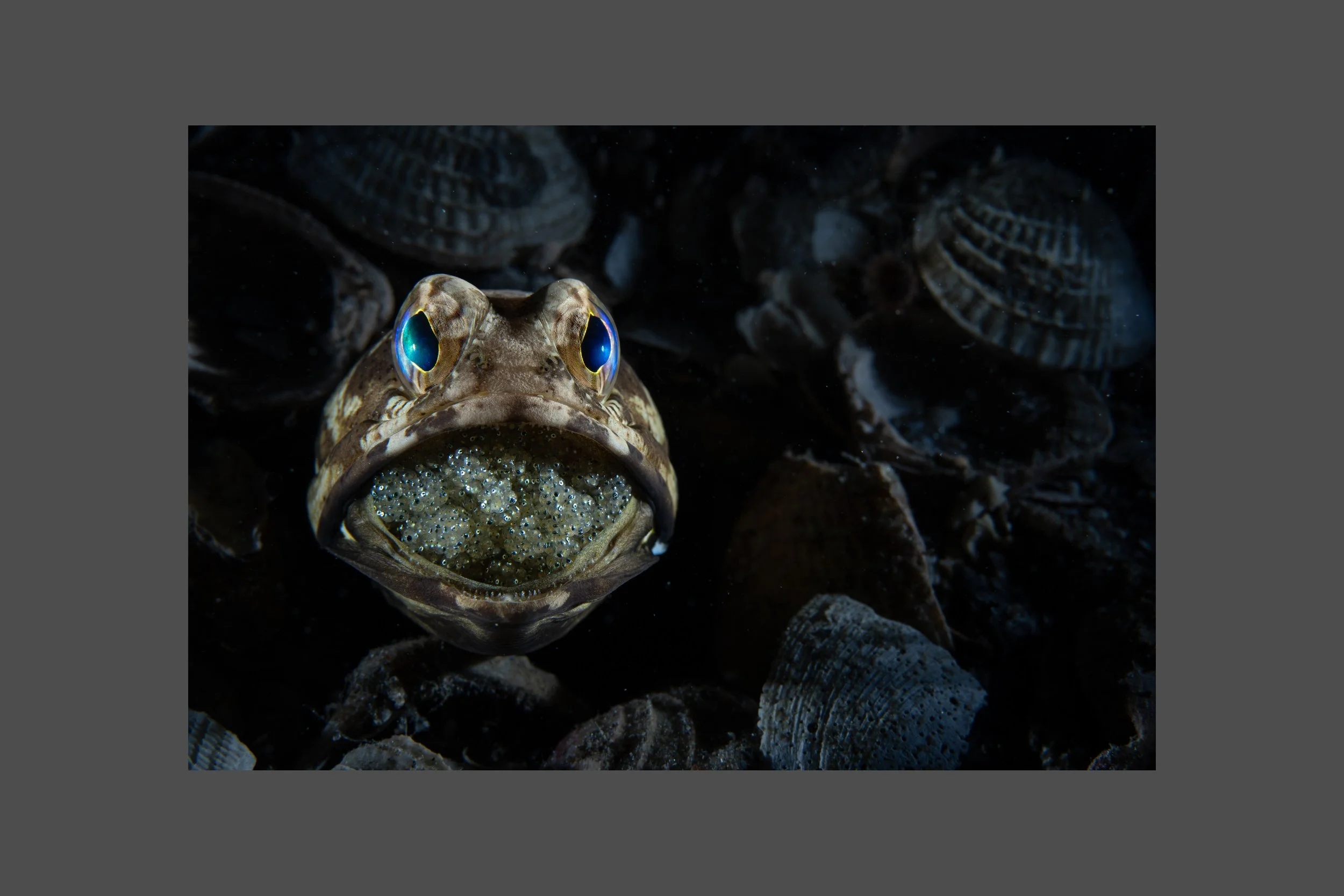
Mouthbrooding
Photographer: Matthew Sullivan
click to view full-screen
1/80 • f/13 • ISO 160 • Sony A1 • 90mm • Tamron 90mm Macro
A male banded jawfish incubating a clutch of nearly-ready-to-hatch eggs. The males mouthbrood each clutch for about a week until the larval jawfish hatch en masse
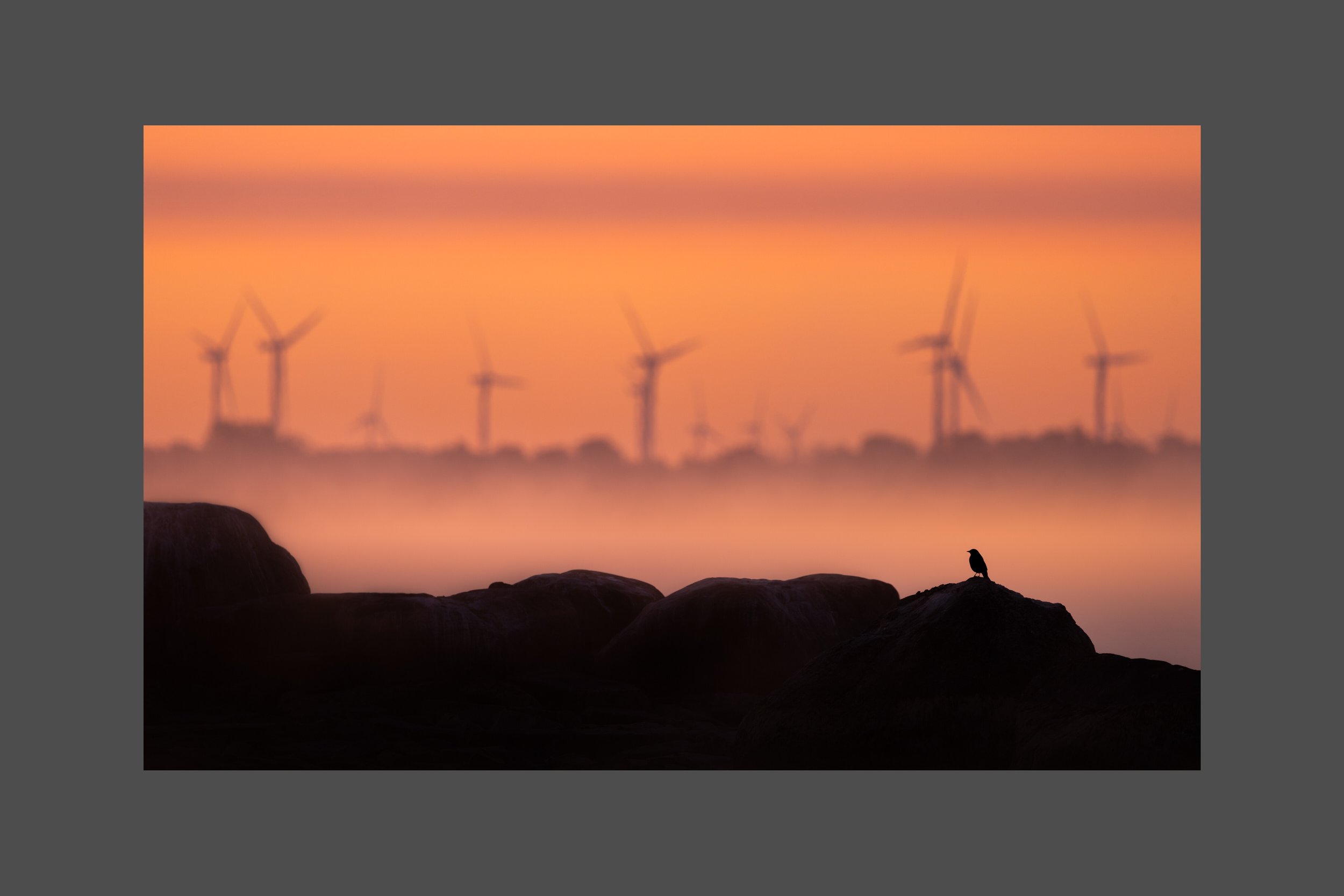
American Pipit
Photographer: Jack Medeiros
click to view full-screen
1/125 • f/7.1 • ISO 100 • Canon EOS R6ii • 500mm • Canon RF 100-500mm f/4.5-7.1 L IS USM
This is one of those wildlife encounters that happened by complete accident. the morning this was taken I was actually set out to photograph migrating waterfowl but it turned out to be unsuccessful. as the light kept getting better and better I began to get discouraged, that quickly changed as a flock of American pipits flew in right in front of me. the colours and the atmosphere were stunning so I knew I had to capture it and do these beautiful scene in front of me justice. I lined up a composition to include the wind turbines in the background to raise awareness on how manmade structures are taking over habitats of all kinds of wildlife.
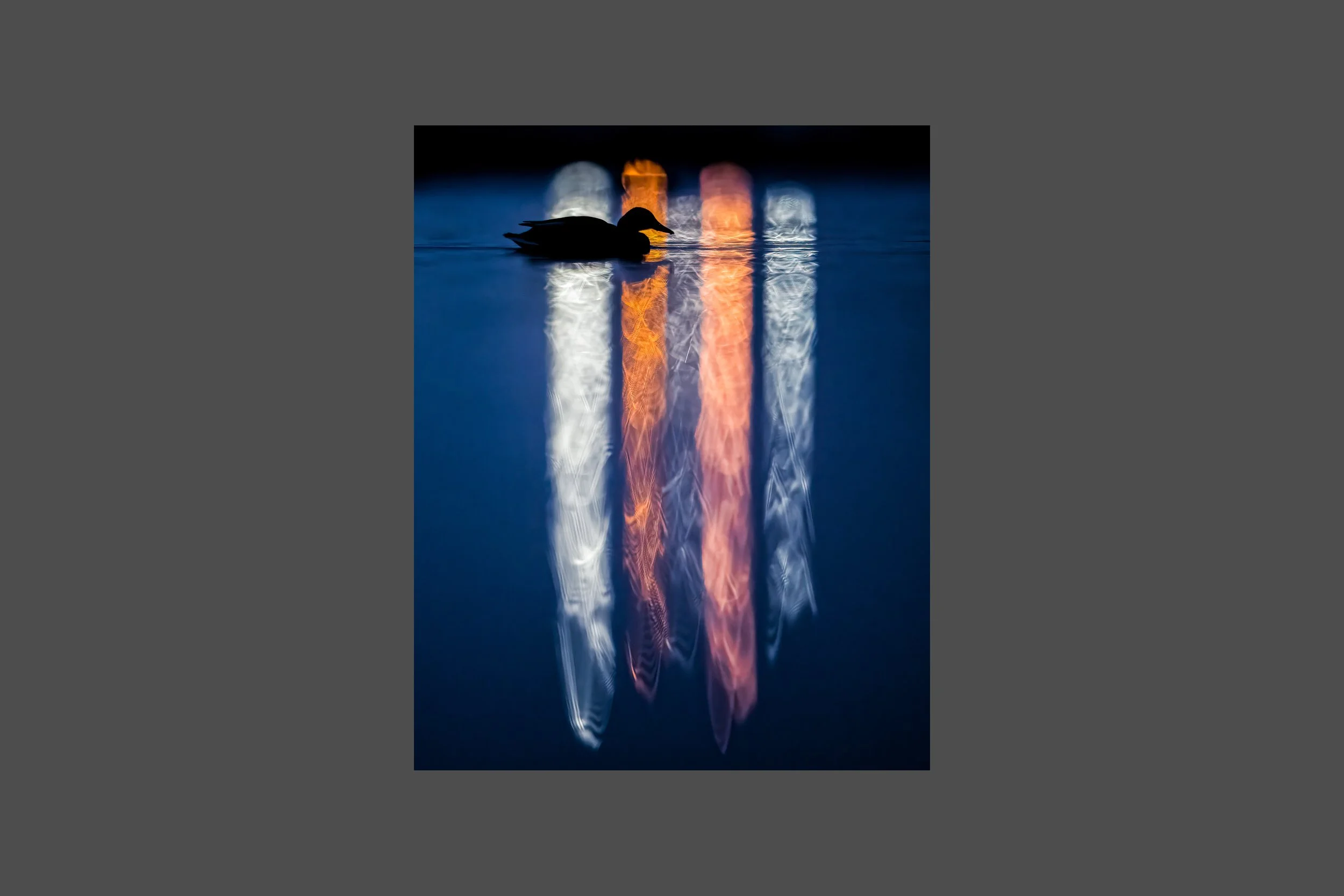
Light Feathers
1/100 • f/2.8 • ISO 2800 • Nikon D850 • 400mm • NIkon 400mm f/2.8 G ED VR


I photographed this silhouette of a mallard where it intersected the elongated reflections from city lights. The reflections appear as feathered patterns on the water. This image was recognized with the Founder's Choice Award in the Wild Art Photographer of the Year 2022 competition and it was published by the BBC.
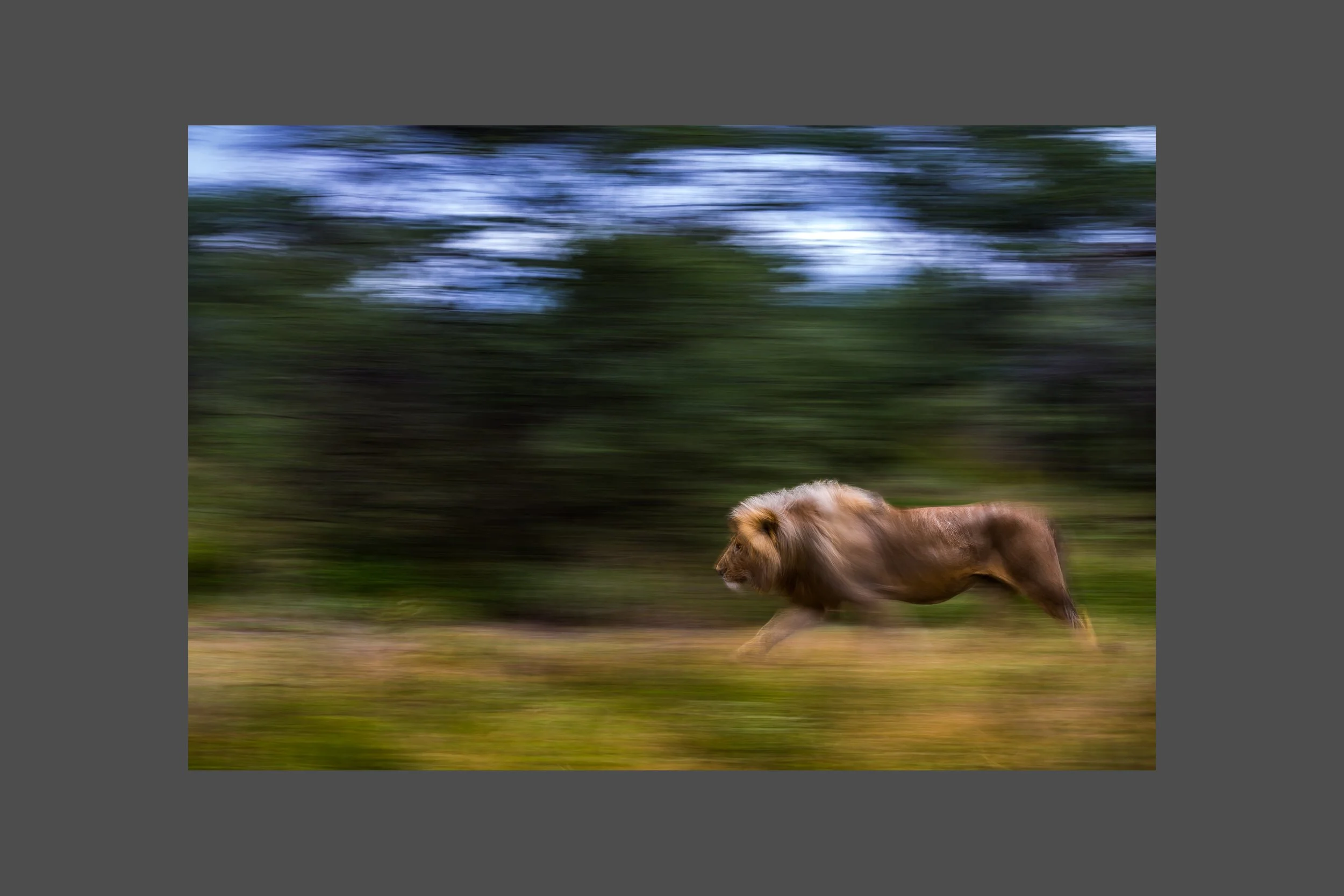
Momentum of a King
Photographer: Mohammad Murad
click to view full-screen
1/3 • f/9 • ISO 50 • -.67EV • Canon EOS 1DX • 100mm • Canon EF 100-400mm f/4.5-5.6 L IS II USM
Taken in Tanzania on my very first journey to Africa, this image represents a decision made long before the trip began, to see the wild through motion rather than stillness! More than 90% of my photographs from this journey were created using slow shutter speeds, embracing blur as a language rather than an accident
Using a variable ND filter, I relied on panning and Intentional Camera Movement (ICM) in almost every frame, allowing the landscape to dissolve while the essence of the subject remained. Here, the lion is not frozen in time; he flows through it
This was not just my first African safari, it was the beginning of a personal visual philosophy where motion becomes emotion, and photography becomes a dance between intention and instinct
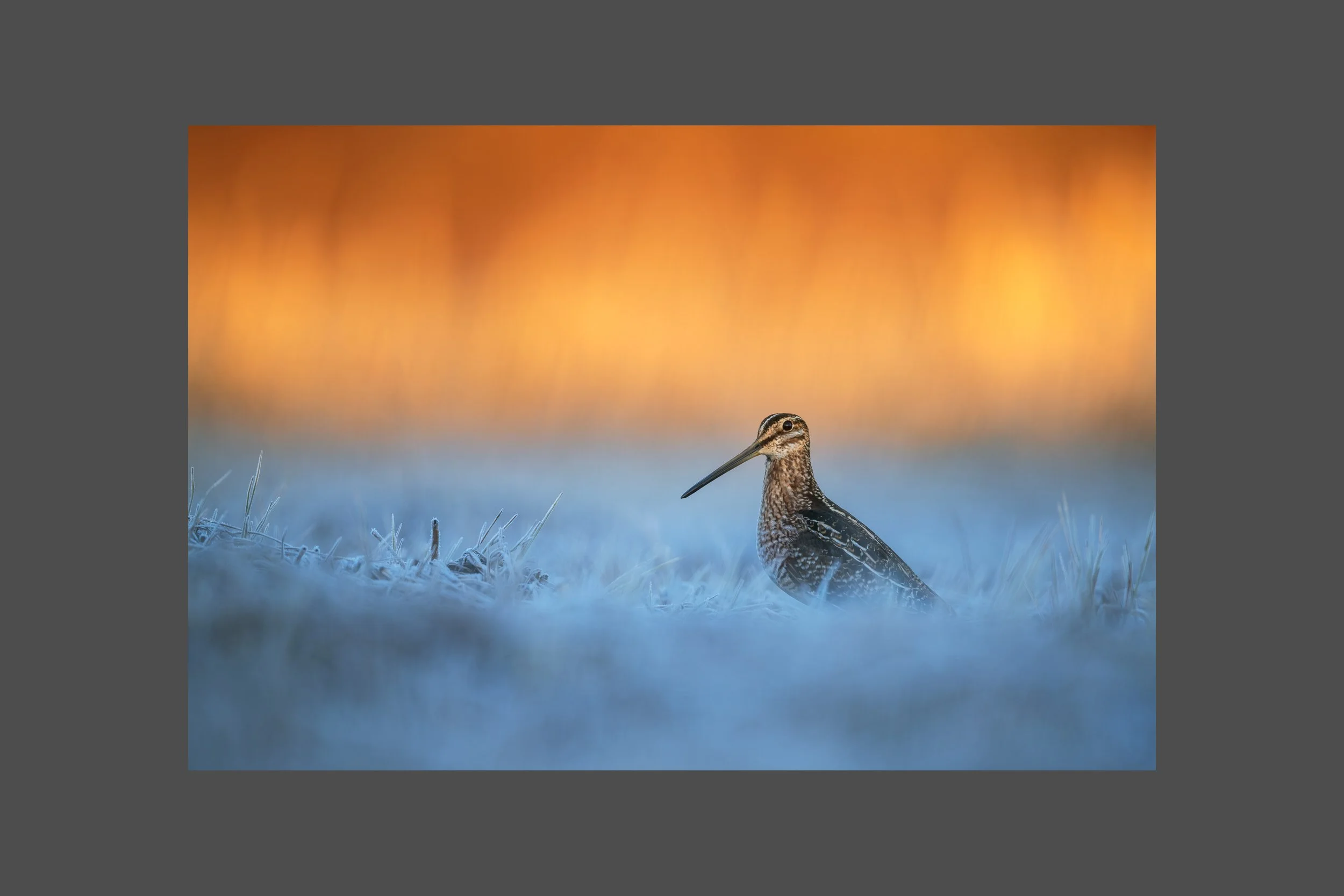
Fire and Ice
Photographer: Brad James
click to view full-screen
1/250 • f/4 • ISO 110 • Nikon D850 • 500mm • Nikon 500mm f/4 G
It was a cool morning in May which here on the island of Newfoundland can often bring frost in the early mornings. I decided to head to a location where I've had luck photographing Wilson's Snipe in the past. I tend to hit this location early in the Spring session before the marsh grasses begin to grow tall and provide shelter for the shy Snipe. Once I arrived at my location all the grasses where covered in beautiful frost and just as the sun began to creepy into the scene this Snipe walked out in the open for a brief moment allowing me to capture this image.
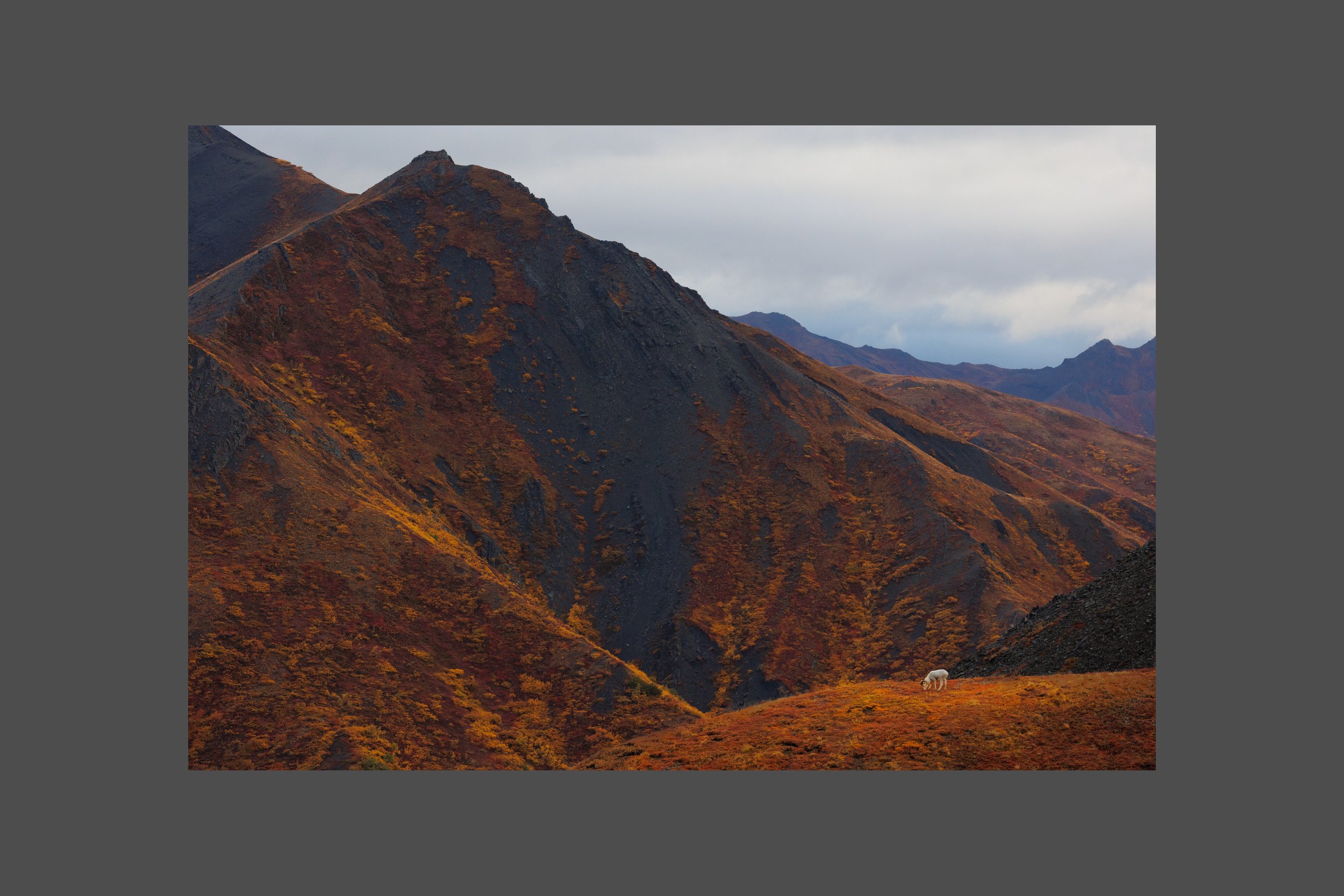
Monarch of the Mountain
Photographer: Nate Catterson
click to view full-screen
1/640 • f/8 • ISO 1600 • Canon R6 • 180mm • Canon 100-400mm f/4.5-5.6
The sun filtered through fast moving clouds on this rainy day I spent with the Dalls last year. I remember hitting my tent soaking wet, dead tired, but happy that night. Time with Dall Sheep is always well spent.
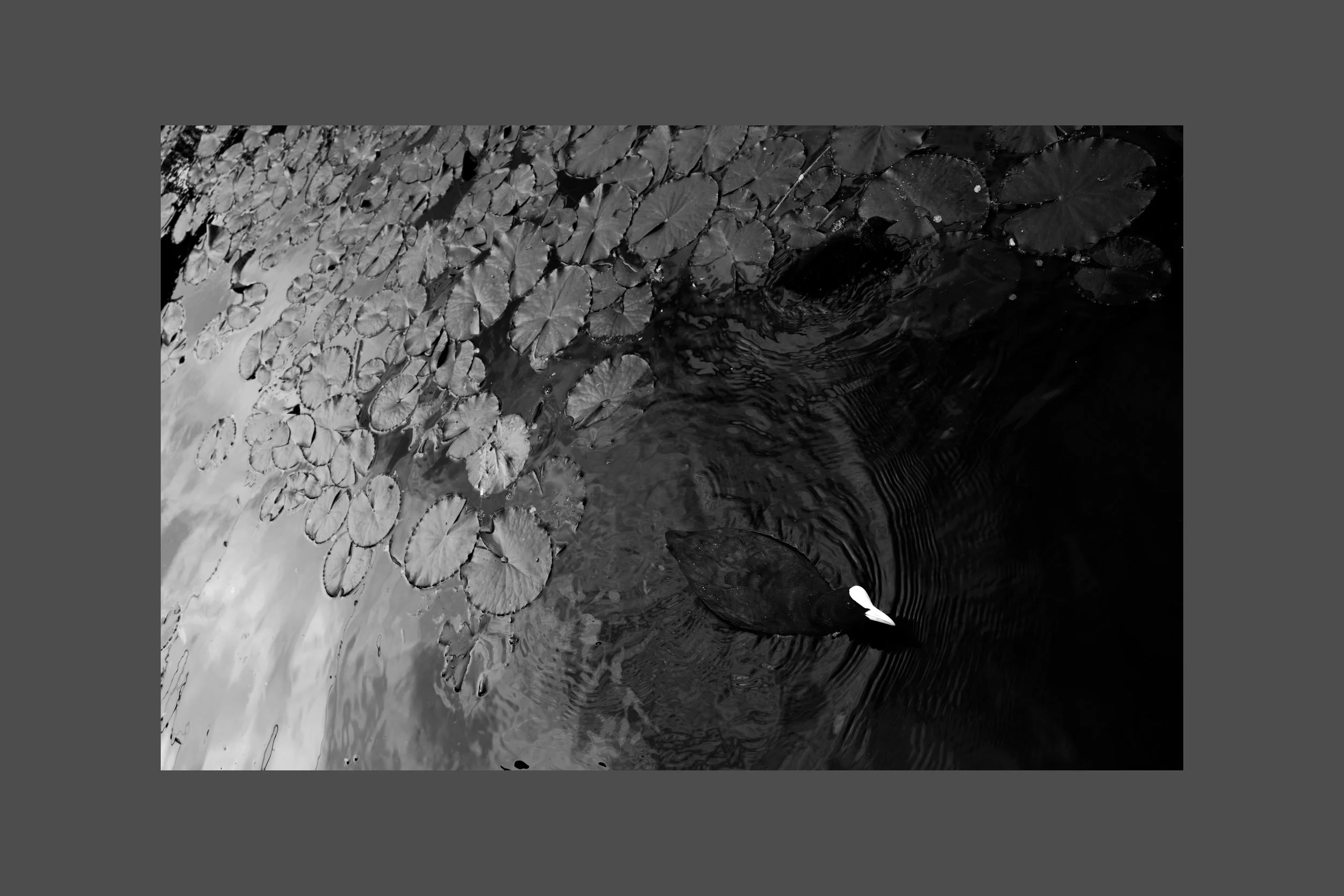
A Life Between the Lilies
Photographer: Malini Chandrasekar
click to view full-screen
1/800 • f/6.3 • ISO 200 • Leic Q2 • 28mm • Summilux 28mm
Chipping away at my species snobbery, I armed myself with a dinky Leica Q2 and headed to my local pond ten minutes away, in the centre of London, U.K. Stepping outside my comfort zone, I began to appreciate form, shape, pattern, and light in ways I hadn’t before.
The luxury of time—to experiment, to slow down, to really look—was unrivalled. It led to quieter, more intimate images like this one. I’ve since returned to photographing coots regularly with the Q2, and will continue to do so as it brings me an immense amount of joy. They are so darn quirky and animated, wonderful beings to photograph.
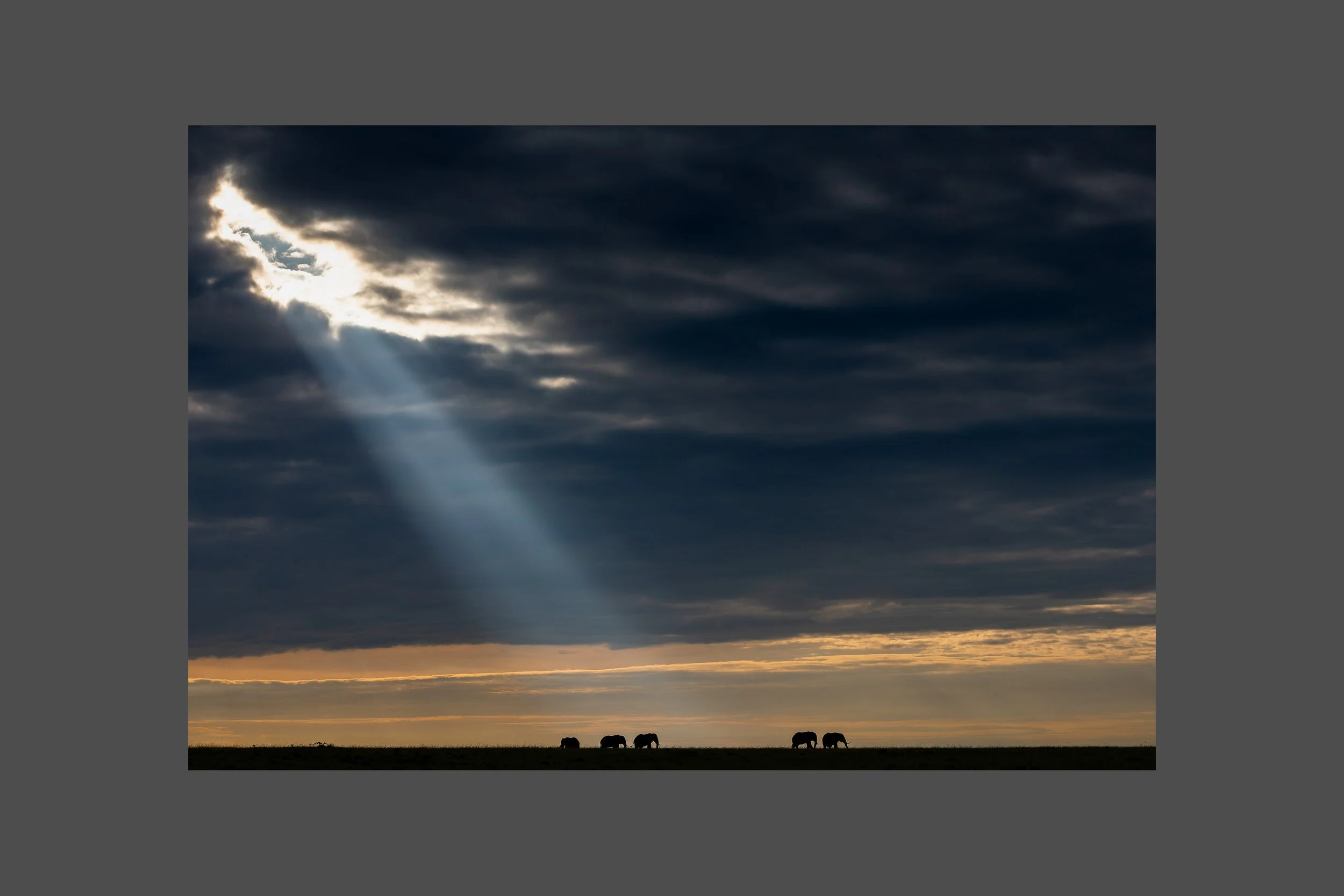
Out Of The Darkness Cometh Light
Photographer: Charlotte Rhodes
click to view full-screen
1/800 • f/10 • ISO 160 • Canon 1DX • 85mm • Canon EF 70-200mm f2.8 II
November is the light rain season in the Masai Mara and this was a typical afternoon where the clouds built up from lunchtime, creating moody skies and storms on the horizon. Here we were fortunate to find a small elephant family crossing the plain as light burst through a gap in the foreboding sky.
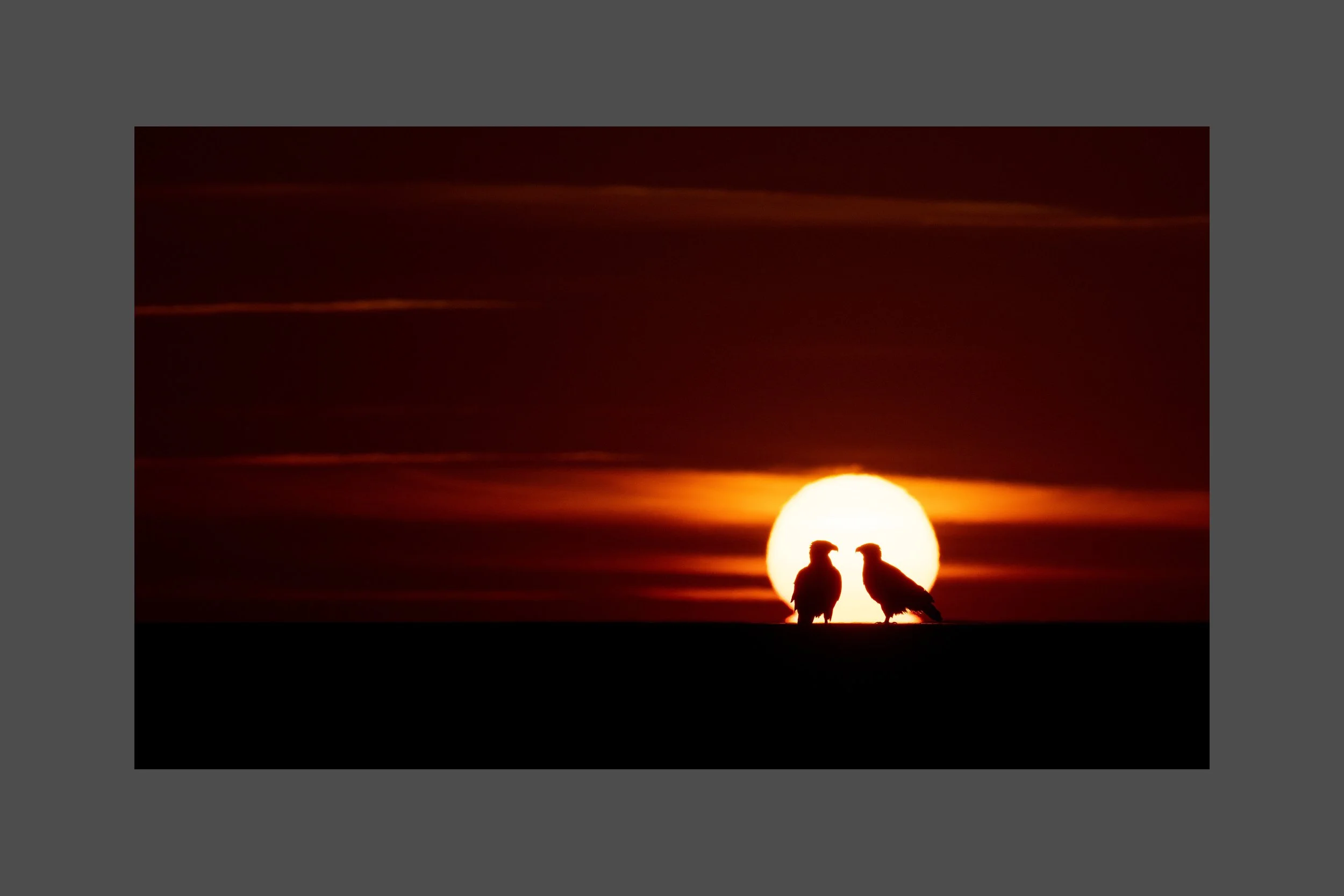
Shared Sunrise
Photographer: Andy Bruner
click to view full-screen
1/32000 • f/7.1 • ISO 400 • Sony A1 • 400mm • Sony FE 400mm f/2.8 GM OSS
I encountered a well-known pair of bald eagles on the beach just before sunrise on Hilton Head Island. Moments earlier, they had mated and then settled together, quietly sharing the first light of day. To preserve detail in their silhouettes against the intensity of the rising sun, I pushed my camera settings to their limits. Capturing this intimate, fleeting moment was both challenging and deeply rewarding.
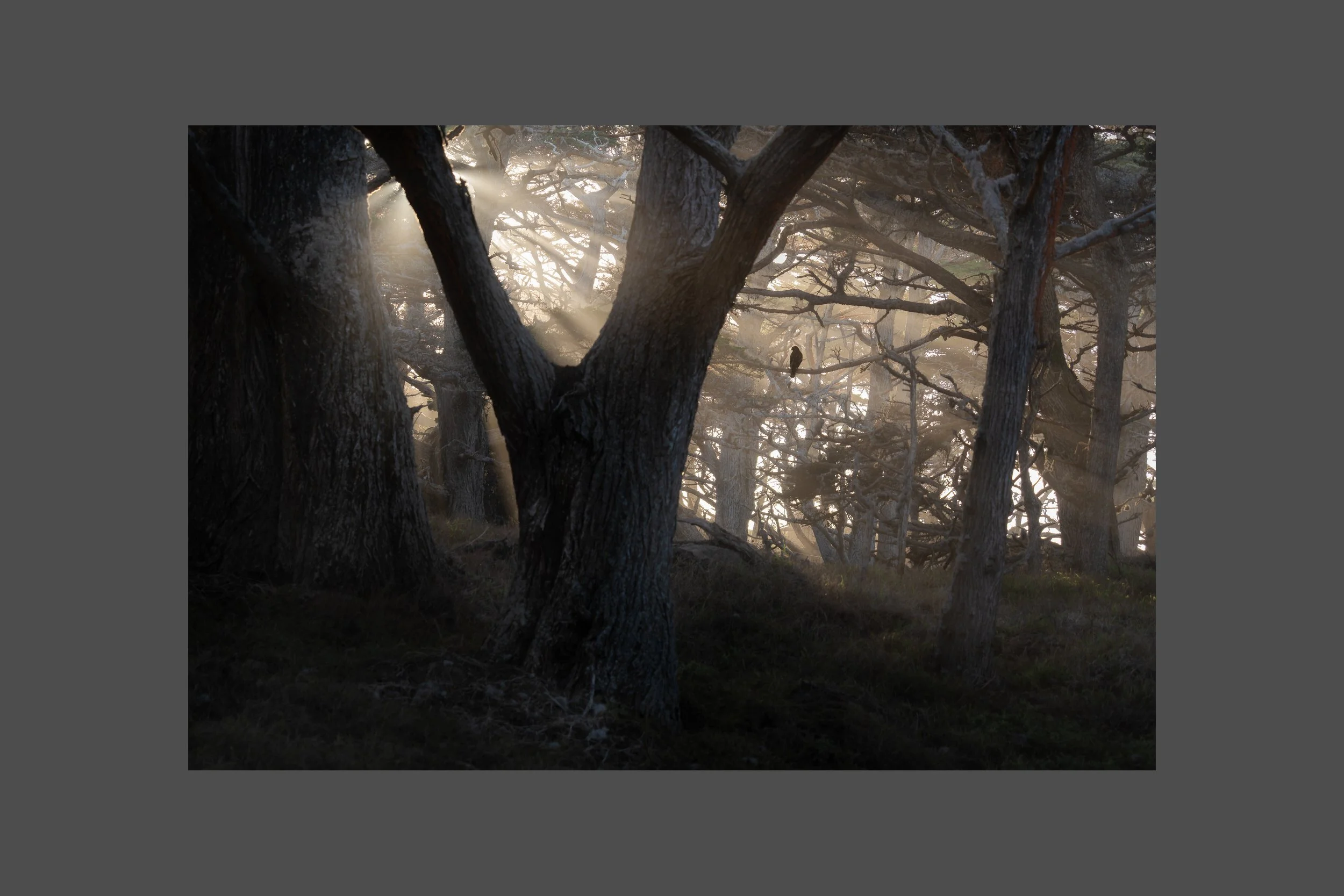
Hunting in the Spotlight
Photographer: Kyle Doerksen
click to view full-screen
1/250 • f/4.5 • ISO 500 • Sony A7IV • 60mm • Tamron 28-200mm f/2.8-5.6
Sometimes you stumble upon a scene at the right time. I was walking through a cypress grove with no intention of photographing birds when I rounded a corner and spotted a nice scene with light filtering through the forest. After a moment, I noticed the hawk perched in the light. I quickly framed this up and walked away with one of my favorite moments of 2025.
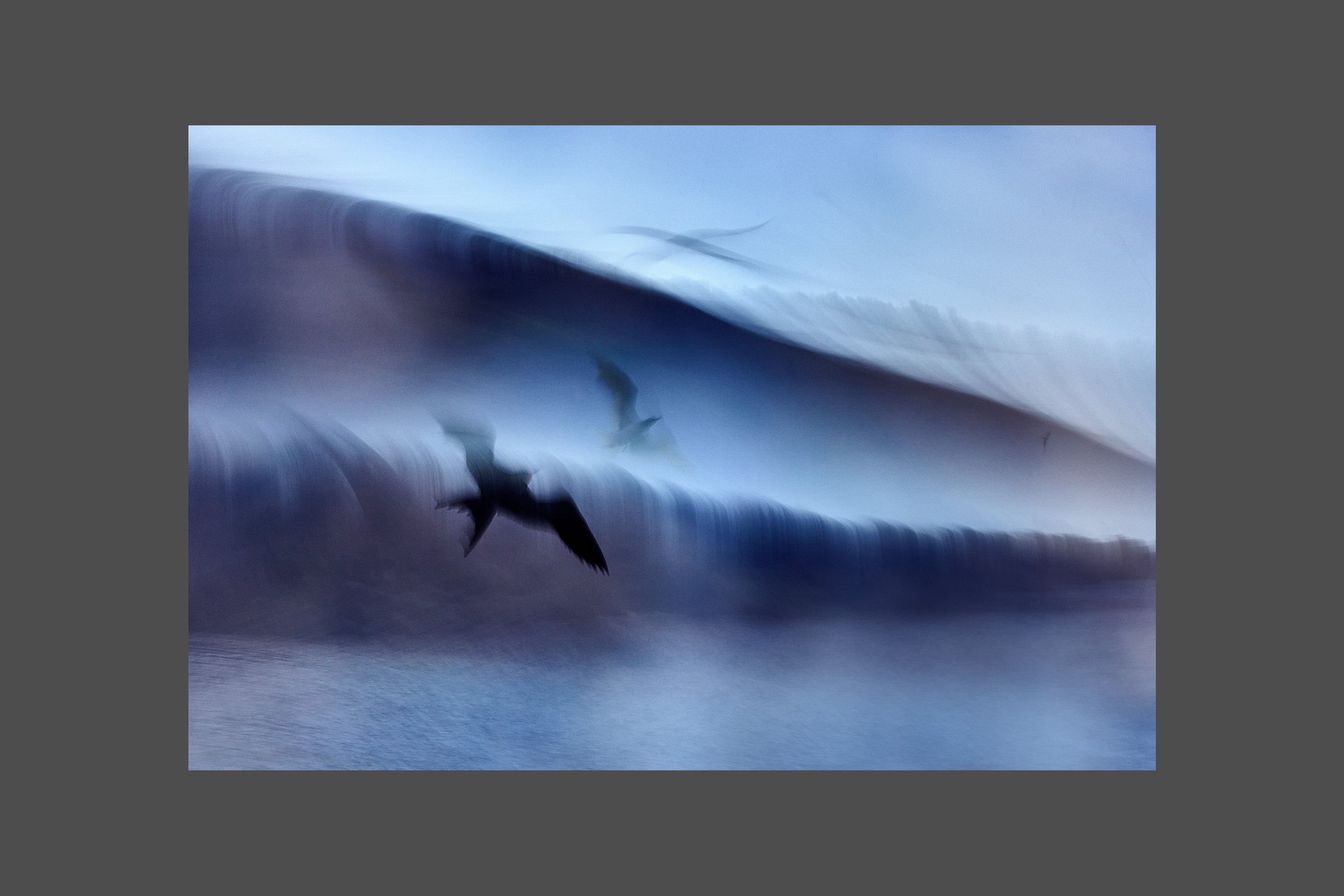
Dark Wings in Blue
Photographer: Jiri Hrebicek
click to view full-screen
1.6 seconds • f/20 • ISO 50 • Canon EOS R5 • 100mm • Canon RF 100-500mm f/4.5-7.1 L IS USM
Seabirds sweep along the Galápagos coastline as the Pacific swell breaks below. I used a slow shutter and intentional camera movement to translate the speed of the flight and the restless motion of the sea, keeping the feeling of the moment rather than freezing every detail.
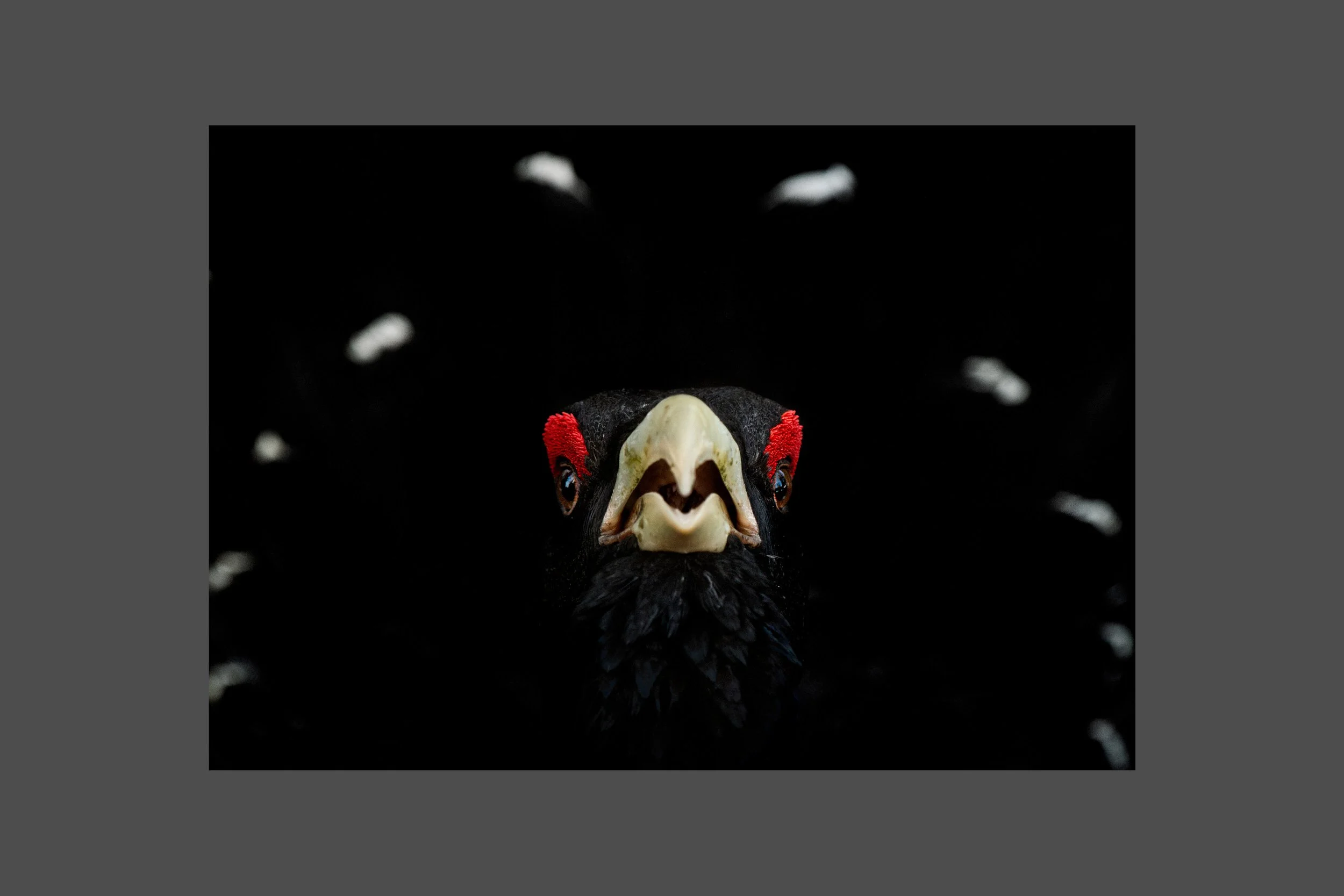
Out of the Dark
Photographer: Jonas Janss Haugli
click to view full-screen
1/1000 • f/7.1 • ISO 4500 • Nikon Z810 • 220mm • Nikon 70-200mm f/2.8 VRII + 2x TC
Western capercaillies are impressive birds. In the spring, they meet on their lek to fight and display. After the lekking season is over, they go back to their secretive life in the forest. But a small percentage of the population have a significantly higher level of hormones, especially testosterone. These birds can display anywhere anytime through the year, and see every living creature as their enemy. Dogs, humans and even cars, they throw themselves at you without fear. Meeting one of these deviant capercaillies, I was able to make some quite different images as he had no fear and displayed on a small hill in front of me. When the Capercaillie folds out his tail during display, a half circle of white patterns emerges. With an otherwise dark background and the black plumage of the capercaillie, I used a heavy underexposure to make an image highlighting the vibrant red eyebrows and the tail feather pattern.
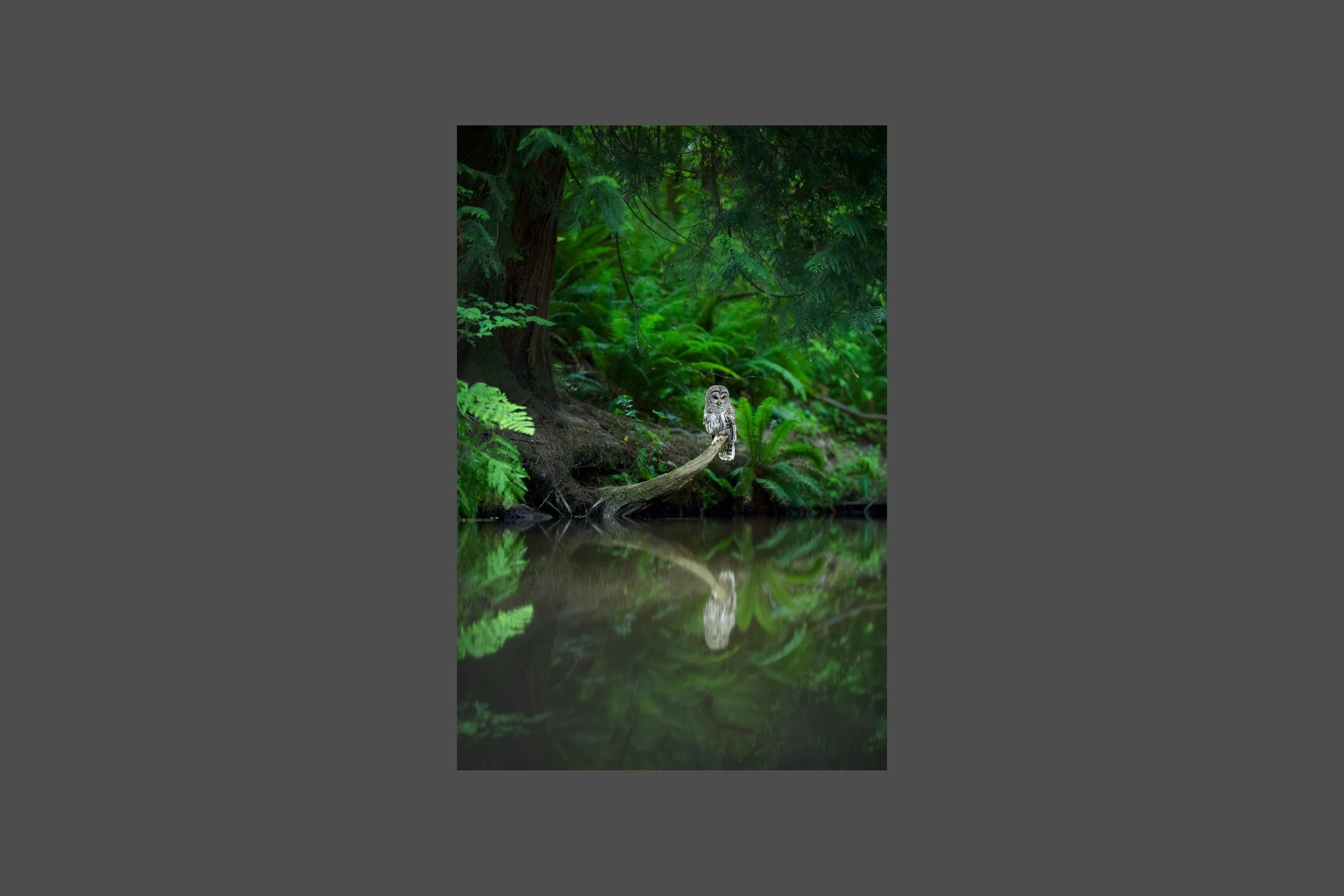
Quiet Reflection
1/30 • f/1.2 • ISO 2000 • Nikon Z9 • 85mm • Nikon 85mm f/1.2

A barred owl perches quietly above a calm forest creek, enveloped by layers of lush green. As it glances downward for a fleeting moment, its reflection shimmers in the still water below—creating the illusion of quiet contemplation. For an instant, the forest seems to pause, as if both owl and creek are reflecting on the life unfolding around them.
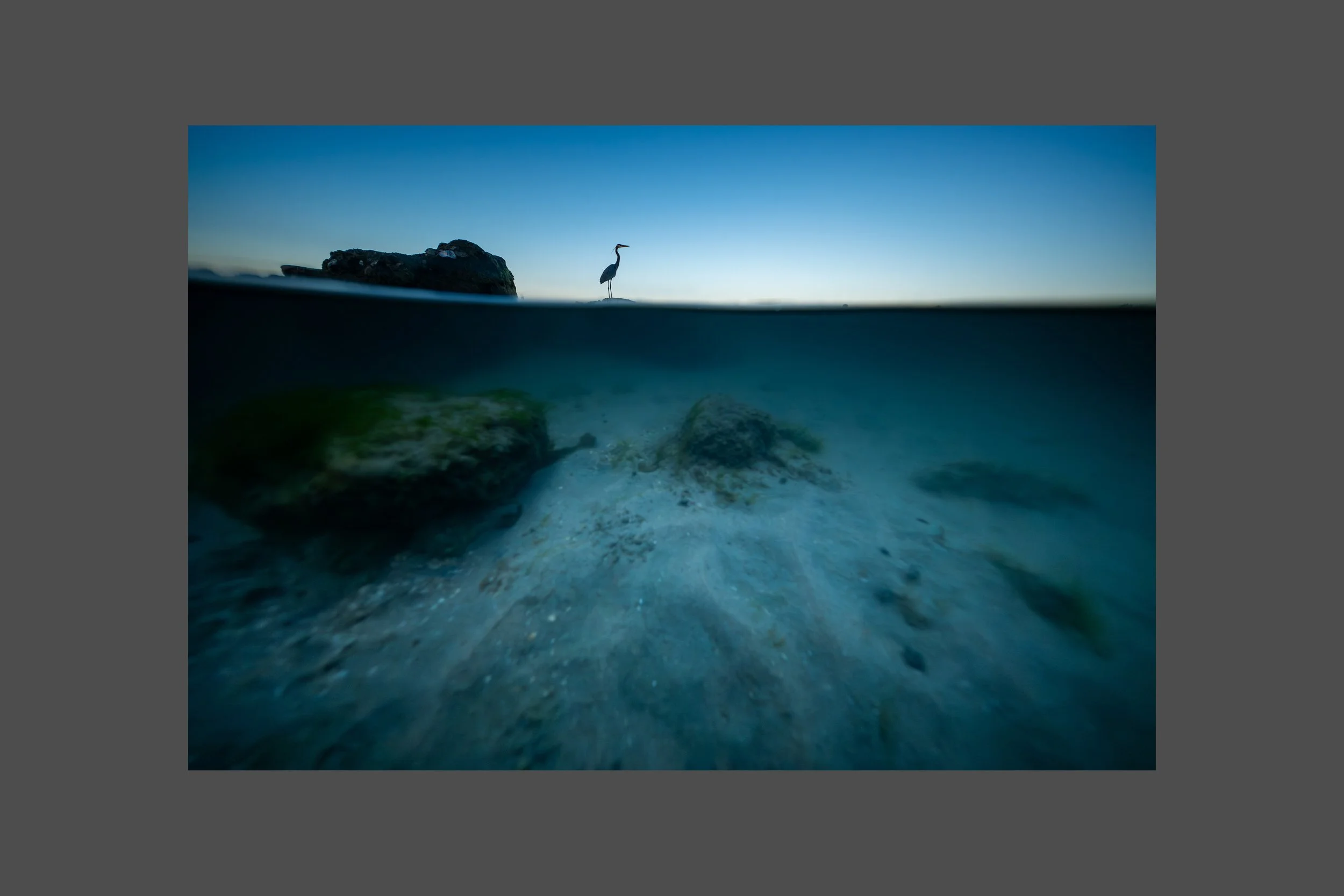
Into the Blue
Photographer: Emilie Reid
click to view full-screen
1/500 • f/5.6 • ISO 640 • Nikon Z6III • 10mm • Laowa FFII 10mm f/2.8
Photographing split level shots for the first time in Florida was a unique and new challenge. I wasn’t feeling very inspired to shoot, but Ray encouraged me to try. Shooting with an underwater housing is honestly quite cumbersome— It makes everything bulkier and heavier, however it is also incredible to be able to capture split level and underwater shots.
This day was a lot of trial-and-error. Playing with holding the housing at different levels above the surface, just at the surface, or just below, to see what would lead to the most pleasing result. I enjoyed this look the most as it smoothed everything out and lead to an even split between the underwater and above. There is not much dynamism in the sky, or beneath the surface, so to me it is much more of a calm, serene, moment in time, captured.
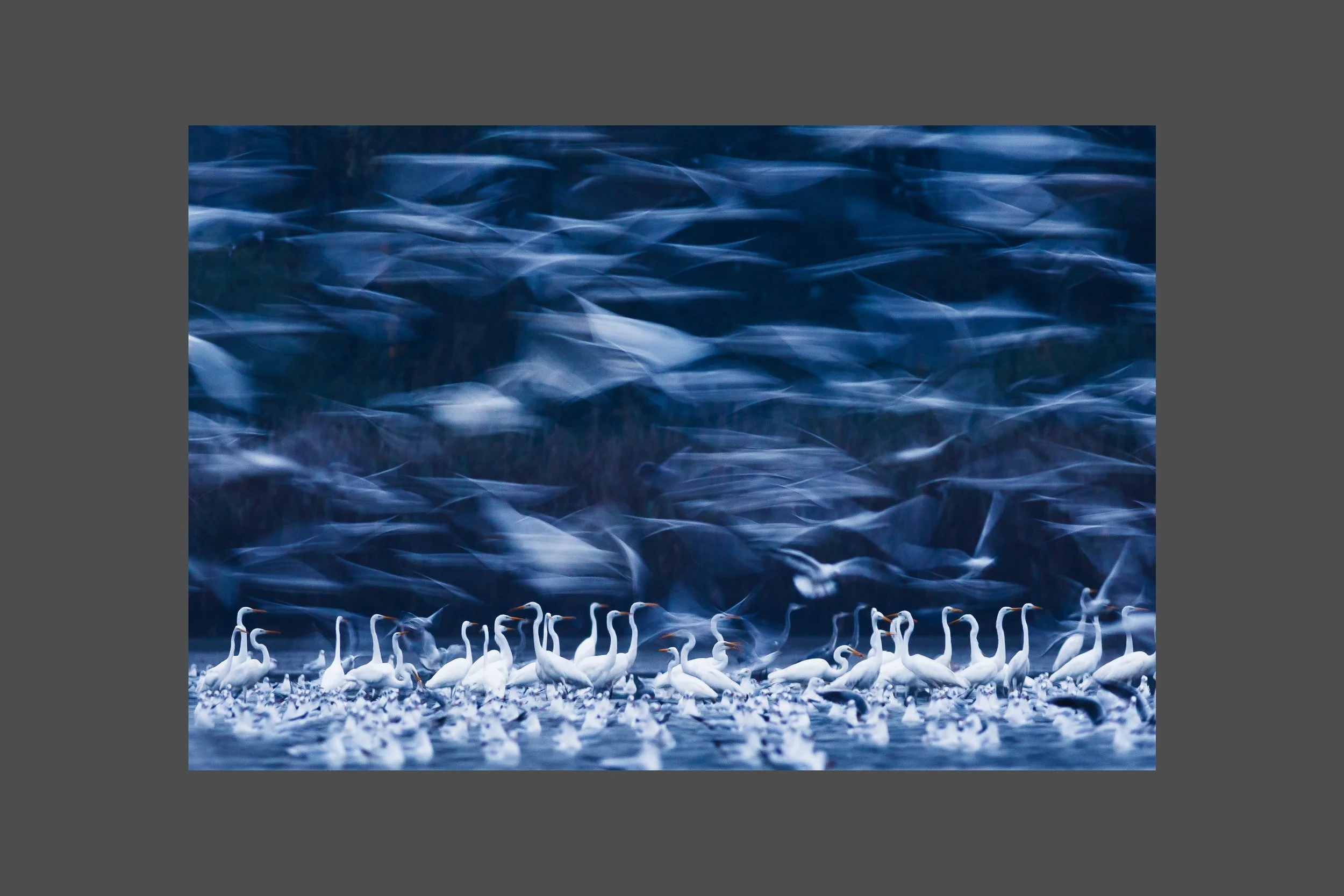
Phantoms of the Morning
Photographer: Mateusz Piesiak
click to view full-screen
1/13 • f/8 • ISO 800 • Canon EOS-1D Mark III • 560mm • Canon 400mm f/5.6 + ex 1.4 III
When fish ponds are being drained, thousands of birds gather for easy prey. While I was photographing these great egrets and gulls, a white-tailed eagle appeared all of a sudden. The gulls panicked while the egrets just froze and did not move. Using a long shutter speed, I managed to capture this fleeting moment.
Thank you for visiting Immerse in the Wild. This website is available only on larger screens, you are kindly asked to view on a larger tablet or desktop screen so that you may enjoy the immersive high quality photos from each amazing photographer featured.