Immerse in the wild welcomes you to a full-screen, high quality wildlife photography viewing experience. You are invited to click on any photo to view additional information including the photographer’s name, camera settings, photo title, and a brief description.
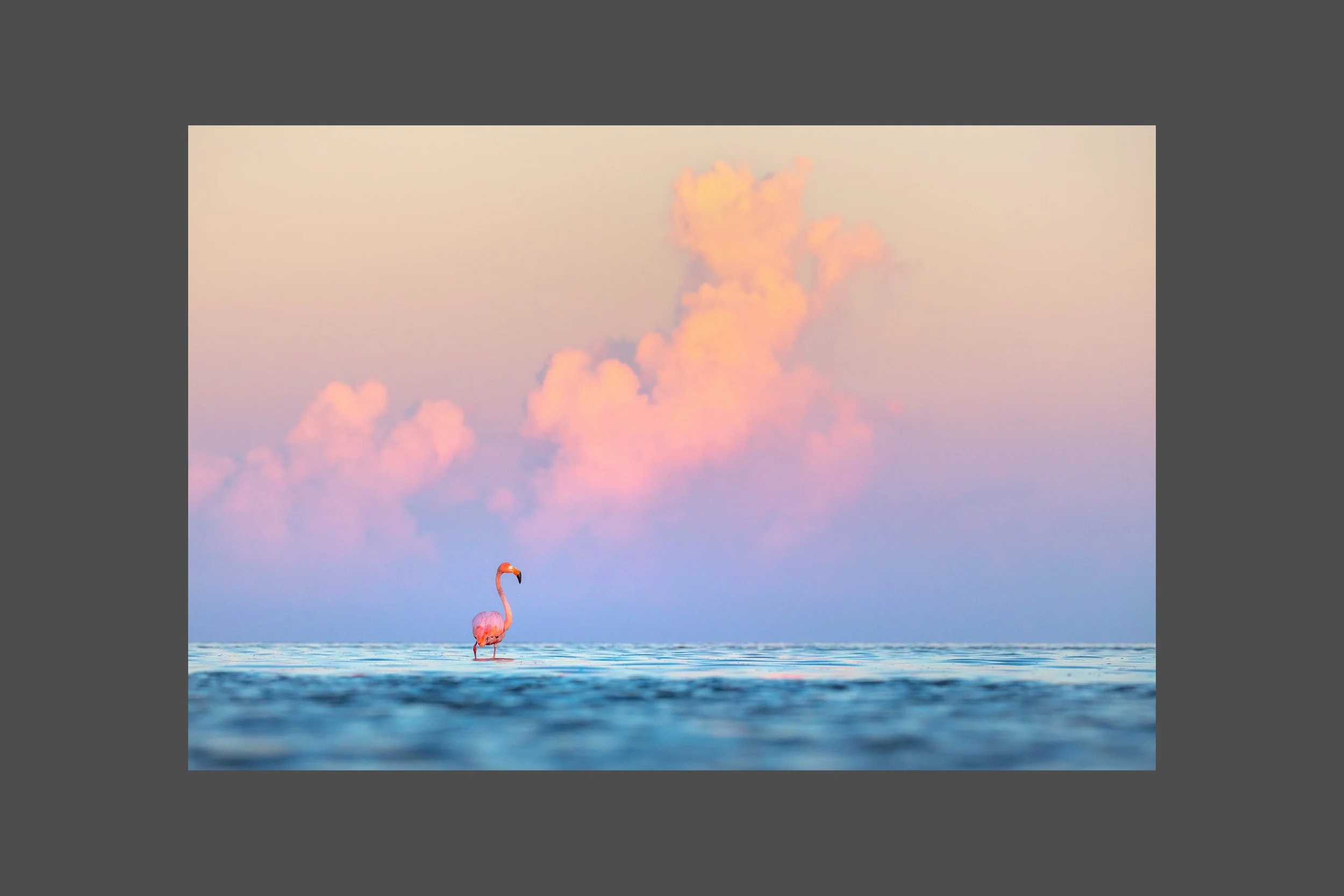
Flamingo Surprise
Photographer: Matt Bruce
click to view full-screen
My wife and I visited Everglades National Park in October of last year and were treated to an incredible surprise while kayaking in a remote section of the park: a flock of 49 American Flamingos! These birds used to be seen in South Florida by the thousands prior to about the year 1900, but the plume trade and habitat degradation led to the eradication of the species in Florida, save for a spattering of transient records here and there. However, in August of 2023 hurricane Idalia passed between Cuba and the Yucatan Peninsula where migrating American Flamingos got swept up in the storm. Idalia continued northeast to make landfall in Florida. Then continued across the Southeast before moving out to sea near the southern border of North Carolina. As the storm moved it deposited flamingos. In the days and weeks following the storm, these displaced birds were spotted in 18 states throughout the East and the Midwest! As time went on most of these birds made their way south but a few nomadic flocks remain along the Gulf Coast. In fact, a survey conducted in February of last year counted 101 flamingos in Florida. It’s wild to think we stumbled across almost half the state’s population.
1/500 • f/7.1 • ISO 1000 • Canon R6 Mark II • 223mm • Canon RF 100-500mm f/4.5-7.1


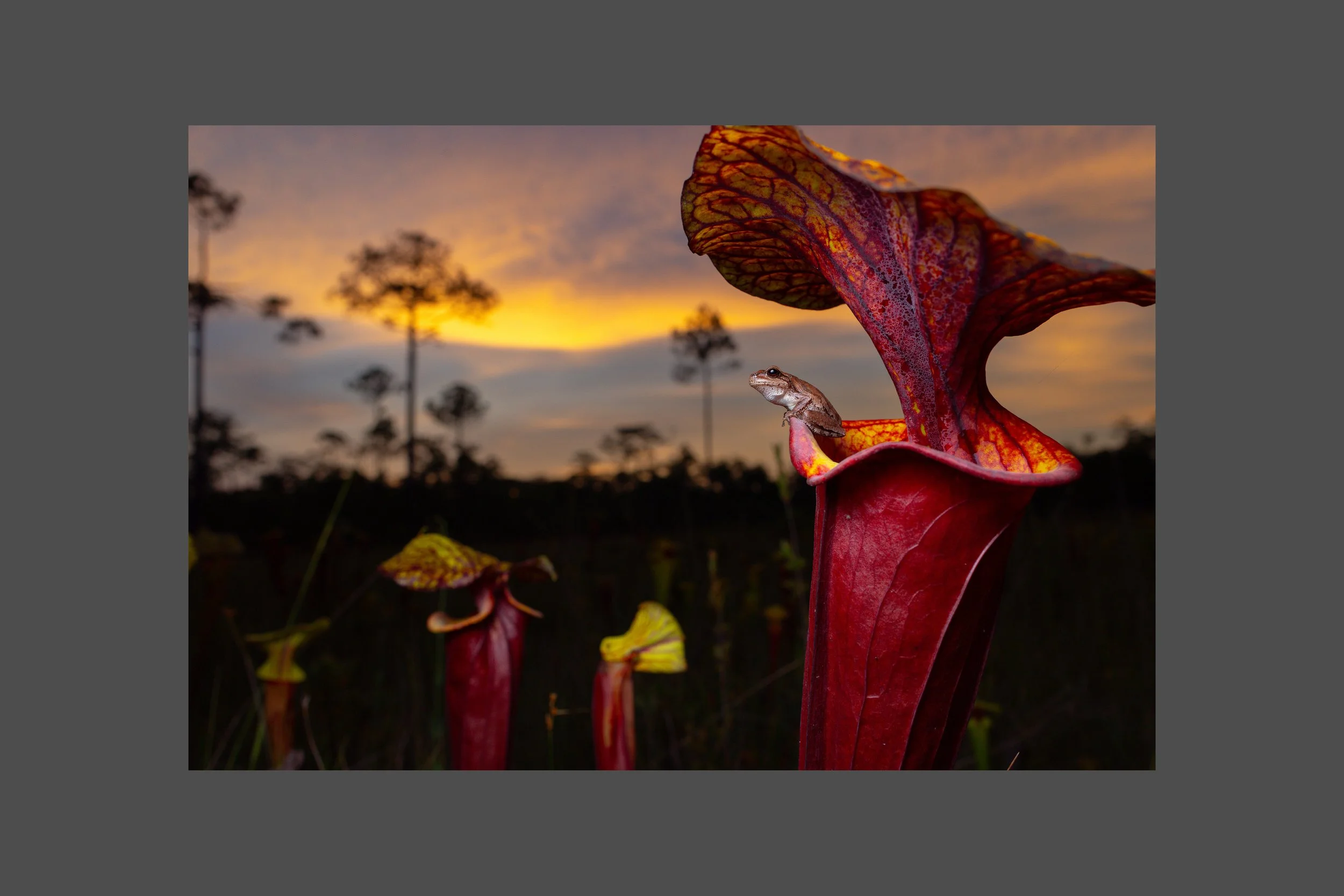
Partners in a Strange World
Photographer: Matt Bruce
click to view full-screen
1/100 • f/8 • ISO 320 • Canon EOS R5 • 24mm • Canon RF 24mm f/1.8 Macro IS STM
Here, a pine woods treefrog is perched at the entrance of the "pitcher" of the yellow pitcher plant (Sarracenia flava). These treefrogs have actually developed something of a mutualistic relationship with pitcher plants. The plants have evolved chemical and visual lures on the underside of the "hood" to attract flies and other small arthropods. After landing under the hood a fly will often fall down into the watery pool deep inside the pitcher and become trapped. It will then get digested very slowly over the course of weeks or months. However, if a treefrog that's sitting just inside the pitcher catches that fly, digests it, and poops it out, those nutrients are readily available to the plant. The plant provides shelter and a steady source of prey for the frog, and the frog does the digestive heavy lifting for the plant. Both species benefit.
Capture note: For this shot I dialed in an exposure for the sky and illuminated the foreground with an off-camera flash and 8x12" diffuser.
Thank you for visiting Immerse in the Wild. This website is available only on larger screens, you are kindly asked to view on a larger tablet or desktop screen so that you may enjoy the immersive high quality photos from each amazing photographer featured.